
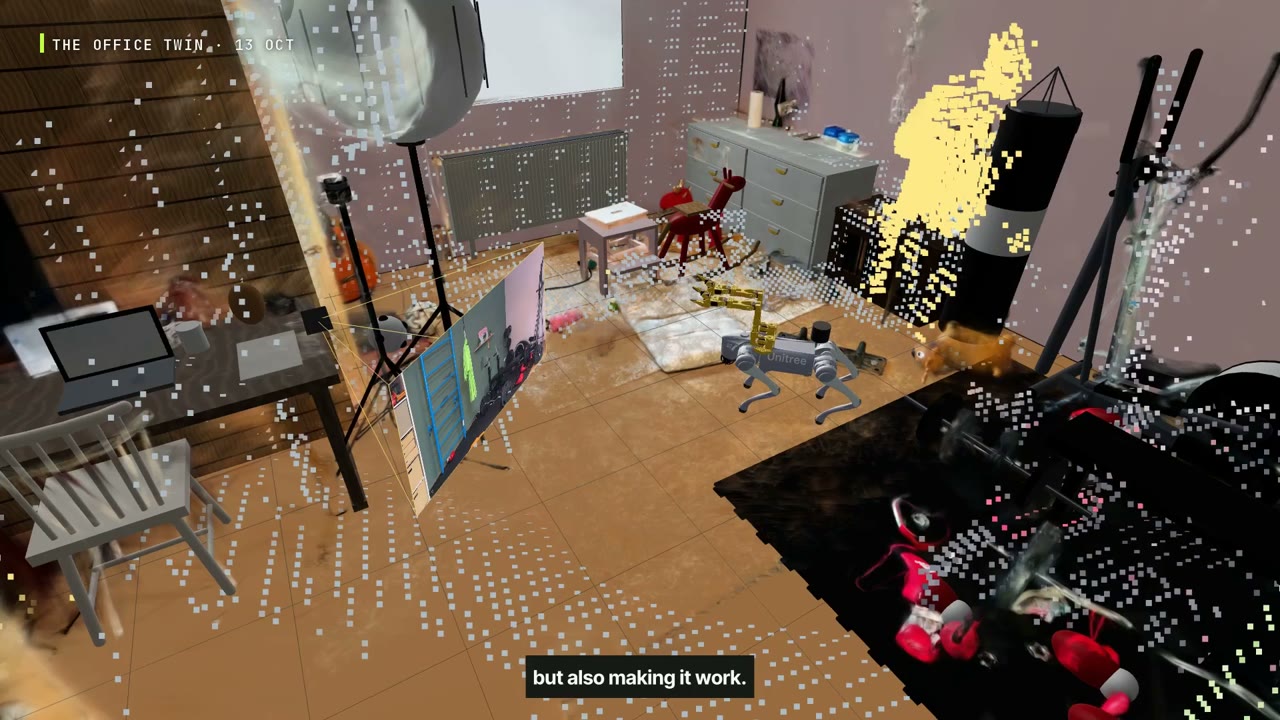
The live OS0 is brought back online and localized in the earlier room map. Walking through the iPhone view drives three calibration iterations; a convincing wall fit initially hides a wrong camera pose. Actual body point clusters become a rough avatar, with estimated intrinsics and unseen anatomy.
The robot dojo had a problem before a robot even entered it: the room had moved. The LiDAR, camera and alignment no longer described the same setup. I wanted to bring the Ouster OS0 back online, find it inside the old map and connect its measurements to my iPhone video. Then I walked through the room and became part of the calibration experiment.
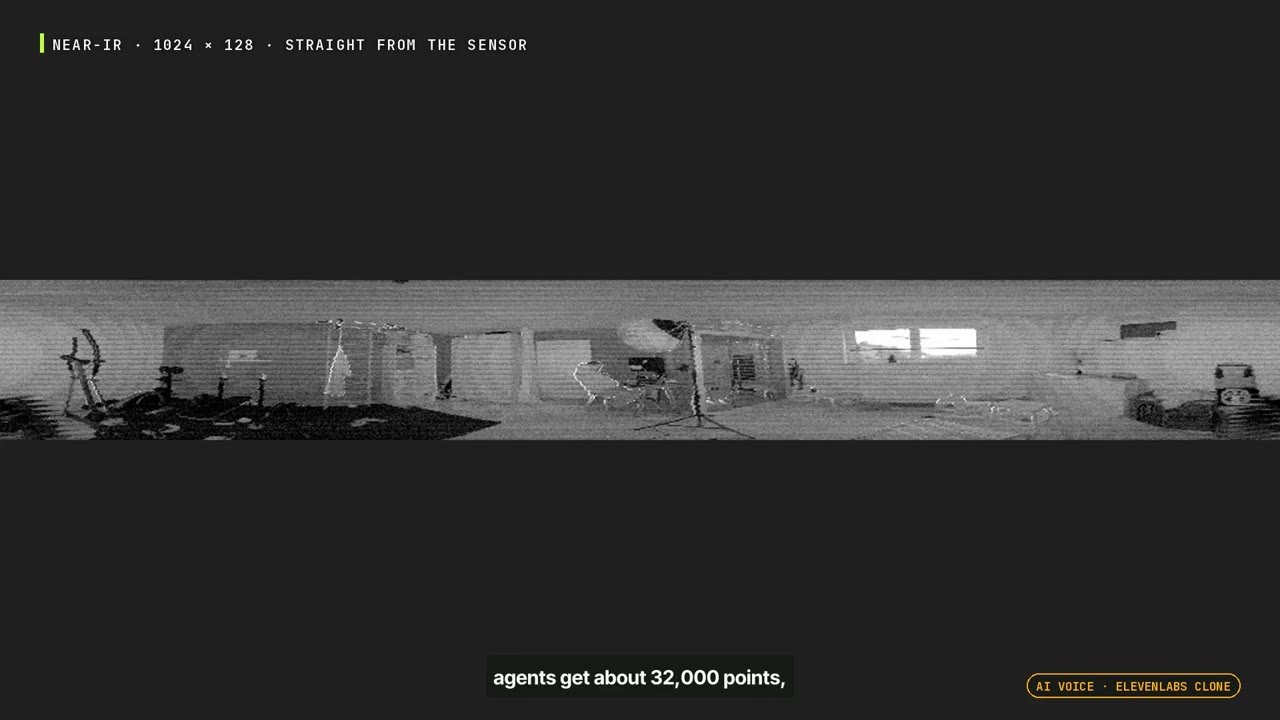
Getting a live stream was its own piece of engineering. The Mac bridge could deliver points, but the browser environment blocked the local connection. Once the data was available, the next task was to locate the sensor against the earlier room scan. A live point cloud is useful only when I know where it belongs.
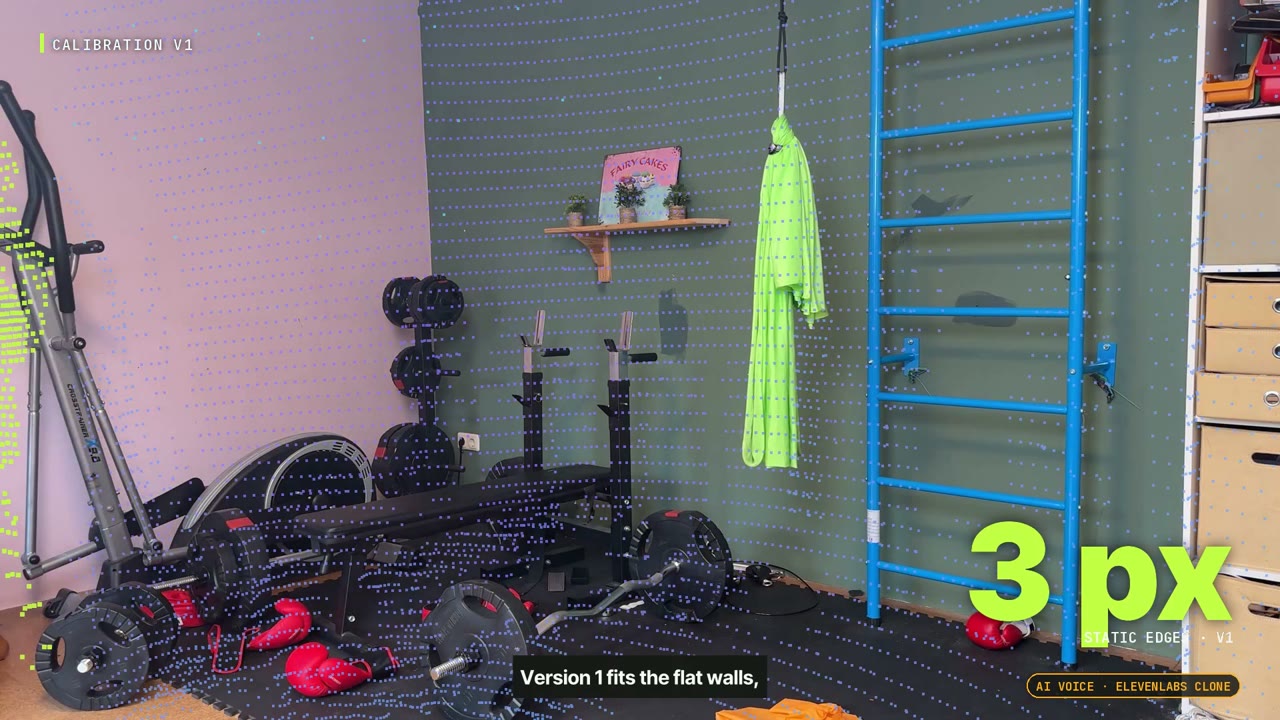
The first camera alignment looked convincing on flat walls. That was the trap. It put the camera in the wrong physical place, so a nice overlay was not enough to call the job finished. We went through two more iterations: matching features between a splat render and the video, then using my moving silhouette across 244 frames. Timing mattered alongside geometry. A point cloud can trail a person even when the static room looks aligned.
The saved third iteration reports about two pixels of residual on the room features and a time offset near minus 1.1 seconds. Those are checks within this recording, with estimated camera intrinsics. They are not independent proof that the entire setup is physically accurate. A proper target-based calibration remains useful work.
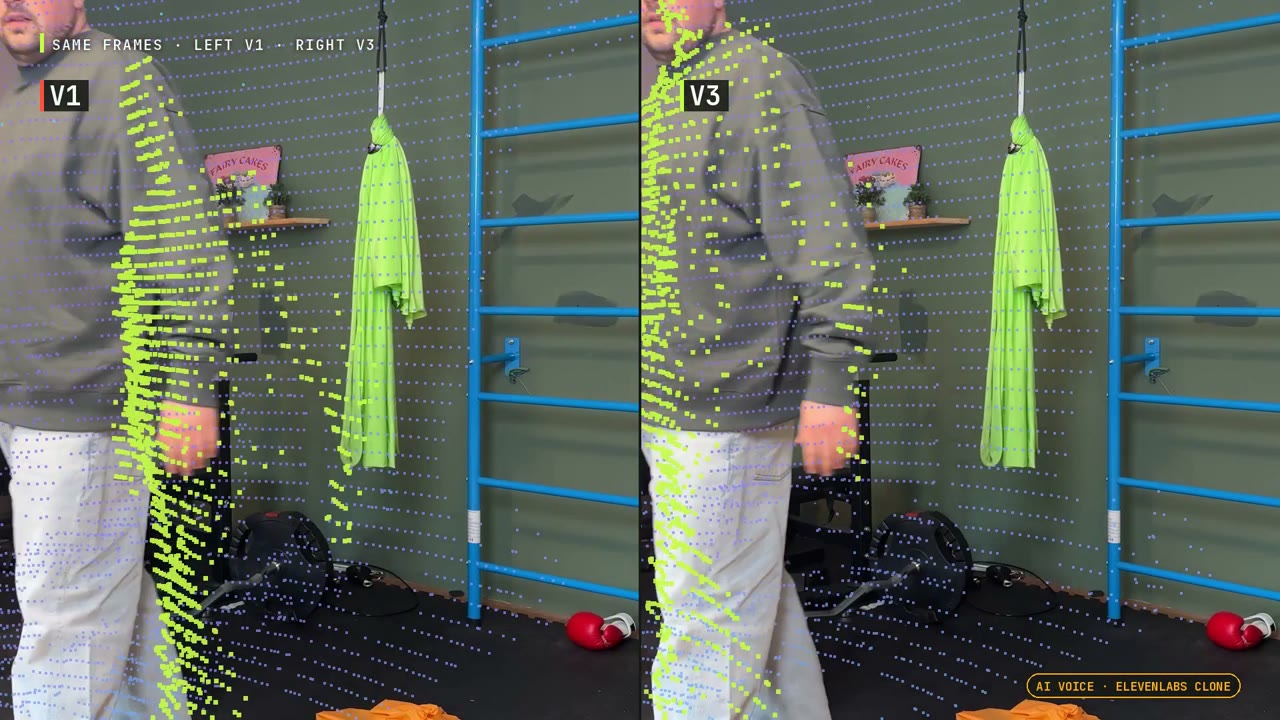
Then the experiment became slightly stranger. We segmented my actual LiDAR body clusters, fitted a skeleton, added camera colours and built a rough walking avatar. Sometimes the heading flipped by 180 degrees. Sometimes the sensor saw little more than legs. Those failures mattered because an avatar can look plausible while quietly filling gaps with assumptions.
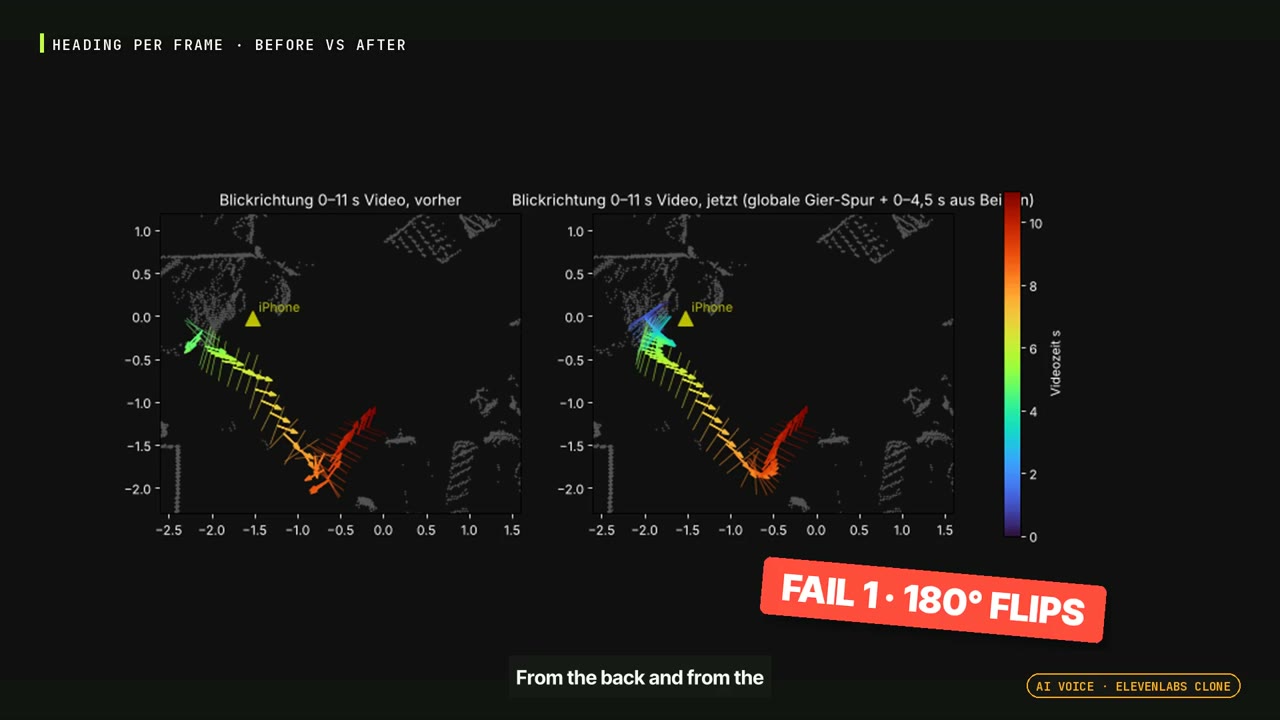
The result is a recorded sensor replay and a simulated digital me, built from one capture. Unseen anatomy and generated walks remain approximations. What I like about this episode is that the apparent success on the wall became the beginning of the investigation. If I want robots to train around my digital twin, I first need to understand which parts came from measurements and which parts I supplied.
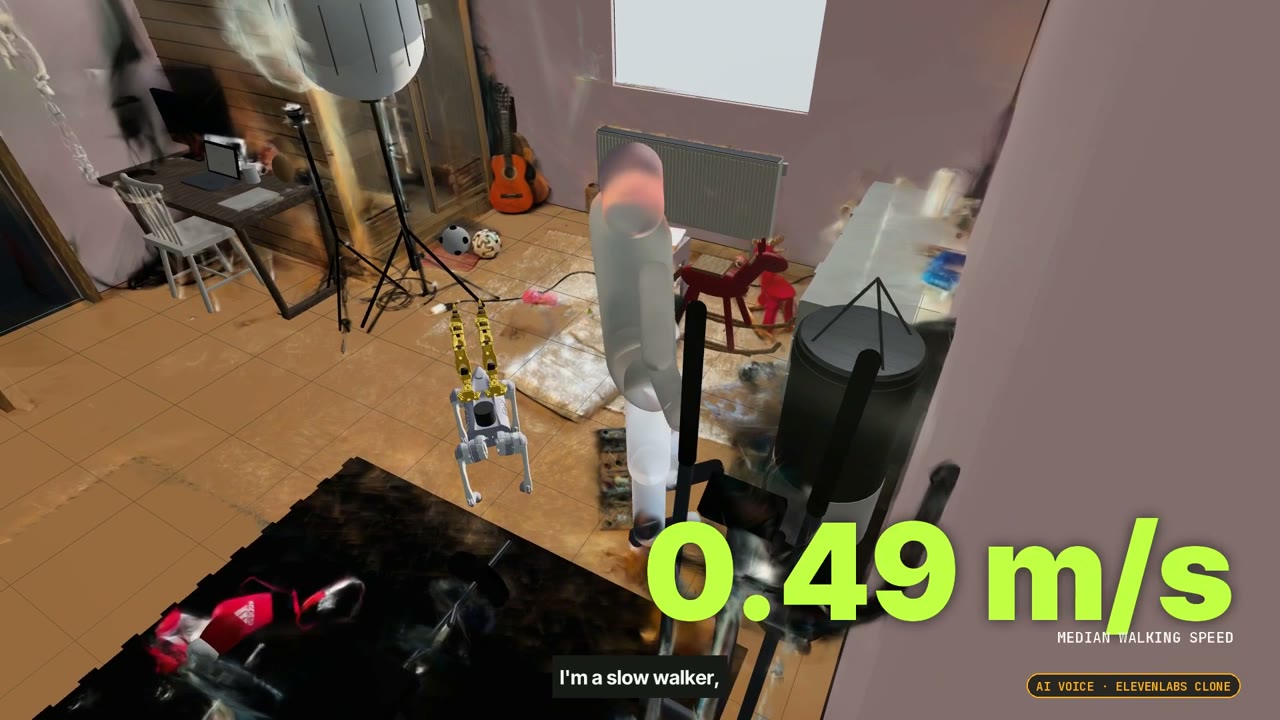
Scope of this episode: Reprojection residuals do not independently validate physical accuracy; intrinsics estimated.
Based on the published episode and its production record. YouTube publication verified 22 October 2026. Stills are extracted from the released episode. Captions distinguish recorded evidence, reconstruction, simulation and illustrative material.