
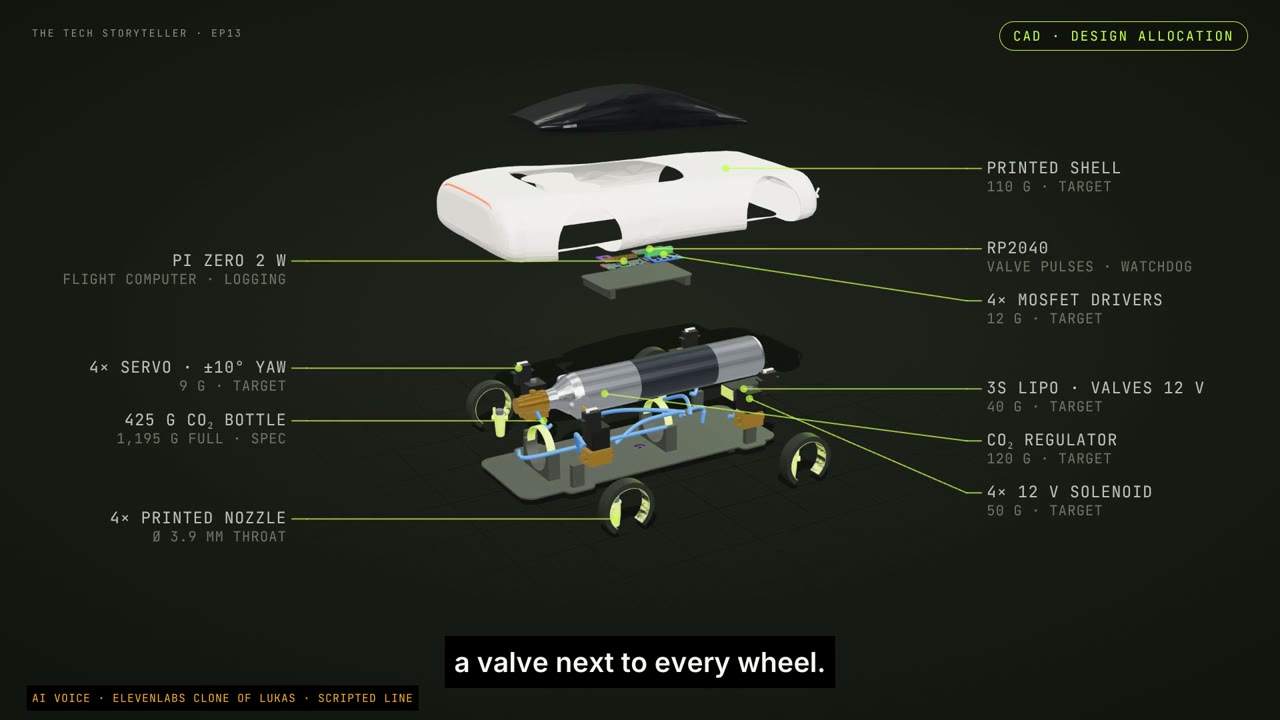
A 52 cm Roadster-inspired CO2-thruster concept moves from CAD to simulation. Ideal hover gives way to gas-flow limits, valve restrictions, cooling and real component mass. Seven-second hover is an ideal simulation result, with no physical gas test performed.
Tesla's airborne Roadster footage sent me into a very practical daydream: could we make a small model hover using CO2 thrusters and a soda bottle? With Claude Opus 5.5 as my co-engineer, I started exploring a 52-centimetre, 3D-printed Roadster-inspired concept. The ingredients were a bottle containing 425 grams of CO2, four nozzles, solenoid valves, a Raspberry Pi Zero and an RP2040.
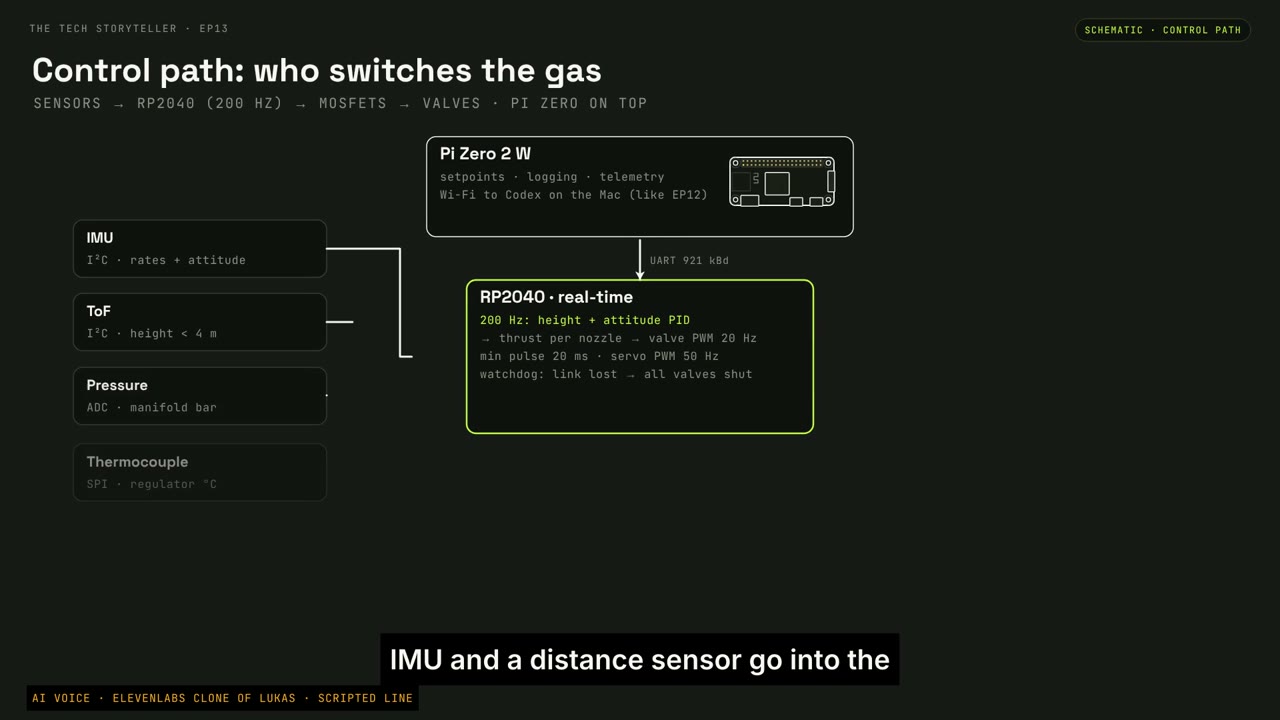
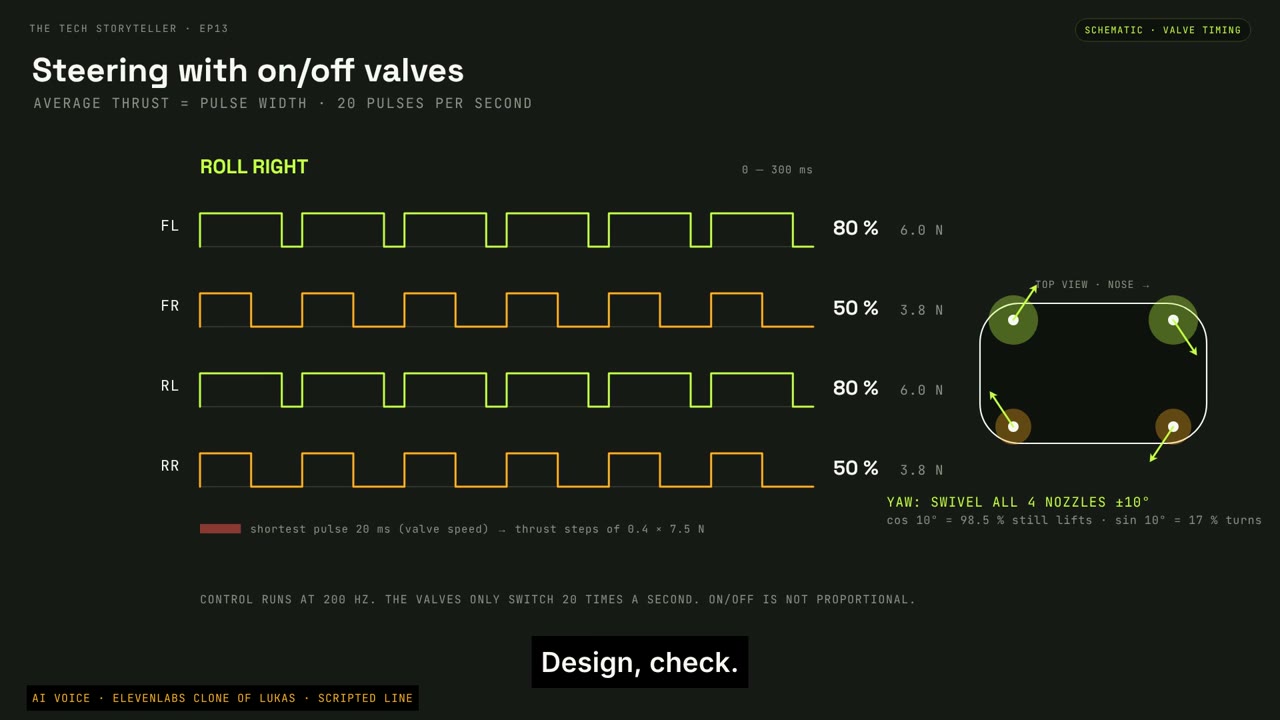
The first question was thrust versus weight. Hovering does not just consume energy; in this concept it consumes part of the vehicle's own mass. We worked through the CAD, a roughly two-kilogram design and the control problem, then put the model into the robot-dojo simulation. In the ideal version, it hovered for seven seconds.
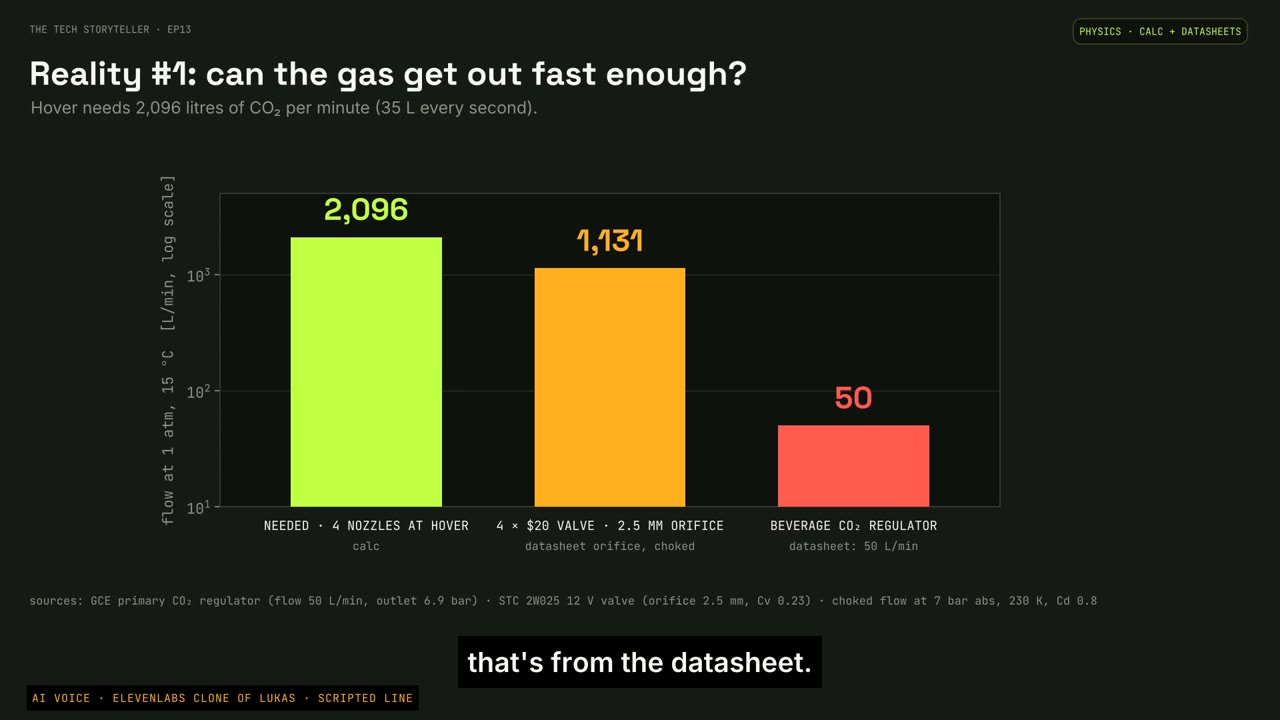
That is a satisfying clip to watch. It is also exactly where I needed to get suspicious. The simulation could request thrust without proving that the real gas path could deliver it. Adding flow limits and valve restrictions changed the result. A nozzle is only one part of the system; everything upstream has to supply it.
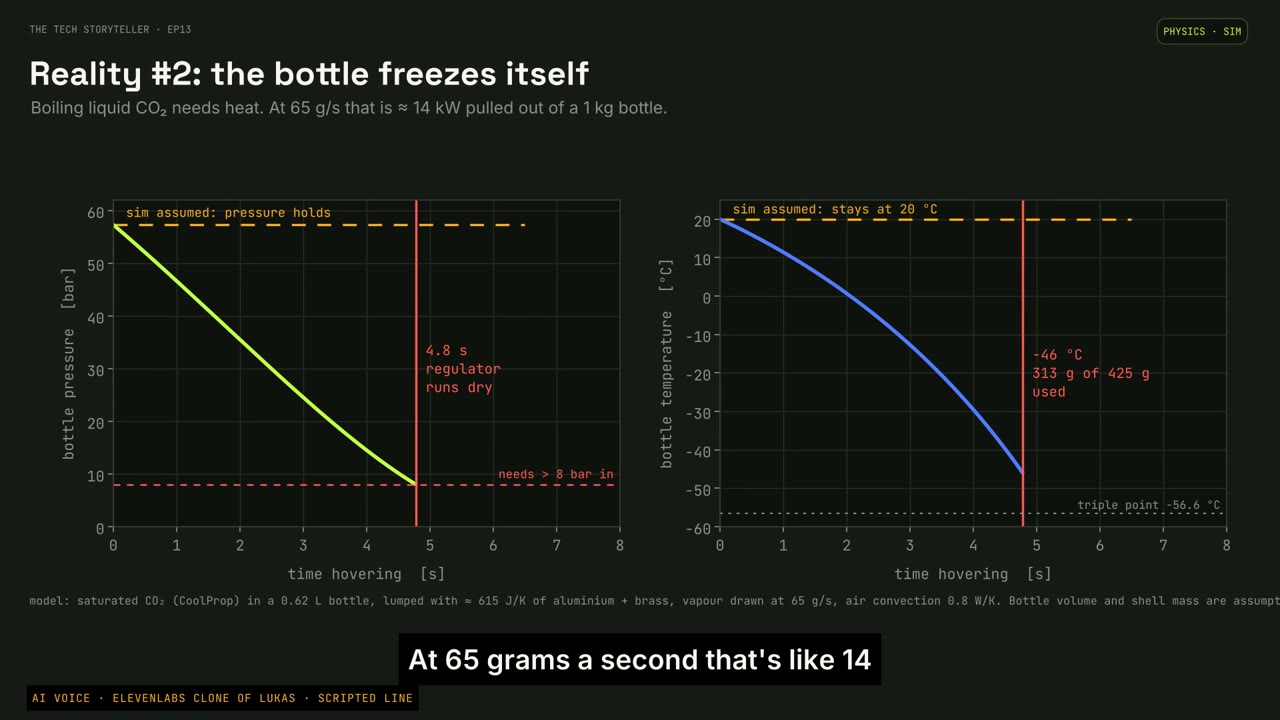
Then came the cooling. Releasing the gas changes the bottle's thermal state, so a constant, ideal supply is a poor stand-in for a small physical system. The model could look controlled while the real bottle would be losing its ability to provide the assumed flow. Finally, the weights of actual regulators, valves and other parts pushed back against the light concept we had started with.
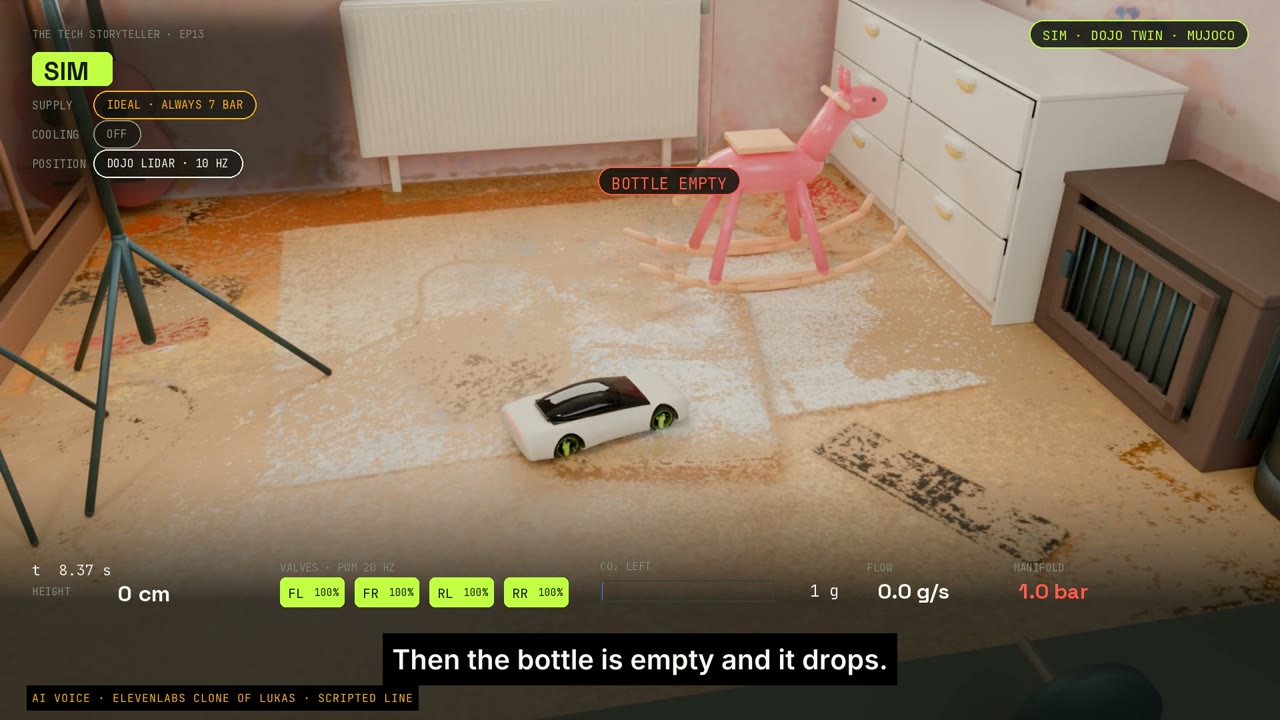
Each of those obstacles changes the next design decision. I cannot choose components by nominal thrust alone, and I cannot treat the controller as a cure for missing supply. The parts, pressure path, thermal behaviour and total mass have to make sense together before the hover result deserves much confidence.
No real gas has passed through this build yet. The flight scenes are simulation, and the seven-second hover belongs to the ideal model. Tesla has not published the propellant or thruster specifications used in the source demonstration, so our comparison is based on assumptions rather than a reconstruction of its system.
The episode ends with a parts question because that is where the experiment honestly stands. Which regulator, valve and tank would make this concept worth testing? The useful result so far is a clearer account of what the beautiful simulation left out—and what the hardware will demand next.
Scope of this episode: No real gas test; Tesla propellant/thruster specs unknown.
Based on the published episode and its production record. YouTube publication verified 22 October 2026. Stills are extracted from the released episode. Captions distinguish recorded evidence, reconstruction, simulation and illustrative material.