EP07 / PRIOR EXPERIMENT
Start with the support line.
The custom quadruped records 18 OK, 19 failed and one aborted simulation. A selected success does not establish repeatability.
 Book a call ↗
UNITREE GO2 & G1 / INDEPENDENT SIMULATION
Independent editorial examples. These projects were not paid for by, sponsored by or affiliated with the featured manufacturers. They illustrate the format of a possible collaboration, not an existing client relationship.
The Go2 and G1 office experiments sit inside a longer story: first learn from a custom robot’s support failures, then build a room to test in, and finally examine how grasping and a simple wave upset the result.
EP07 / PRIOR EXPERIMENT
The custom quadruped records 18 OK, 19 failed and one aborted simulation. A selected success does not establish repeatability.
EP08 → EP09
An office twin introduces alignment, collision and grasping problems. A humanoid wave becomes a balance test.
HERON / LATER DESIGN
Changing the neck, hand and mass changes the body’s stability problem. A recognisable character is not yet a walking robot.
CROSS-EPISODE FIELD NOTES · UPDATED 22 OCTOBER 2026
A robot moving on an empty floor answers a different question from a robot reaching for something in my office. The Go2 and G1 experiments became useful when the environment, the controller and the requested motion stopped agreeing. The episodes around them explain how we reached that point.
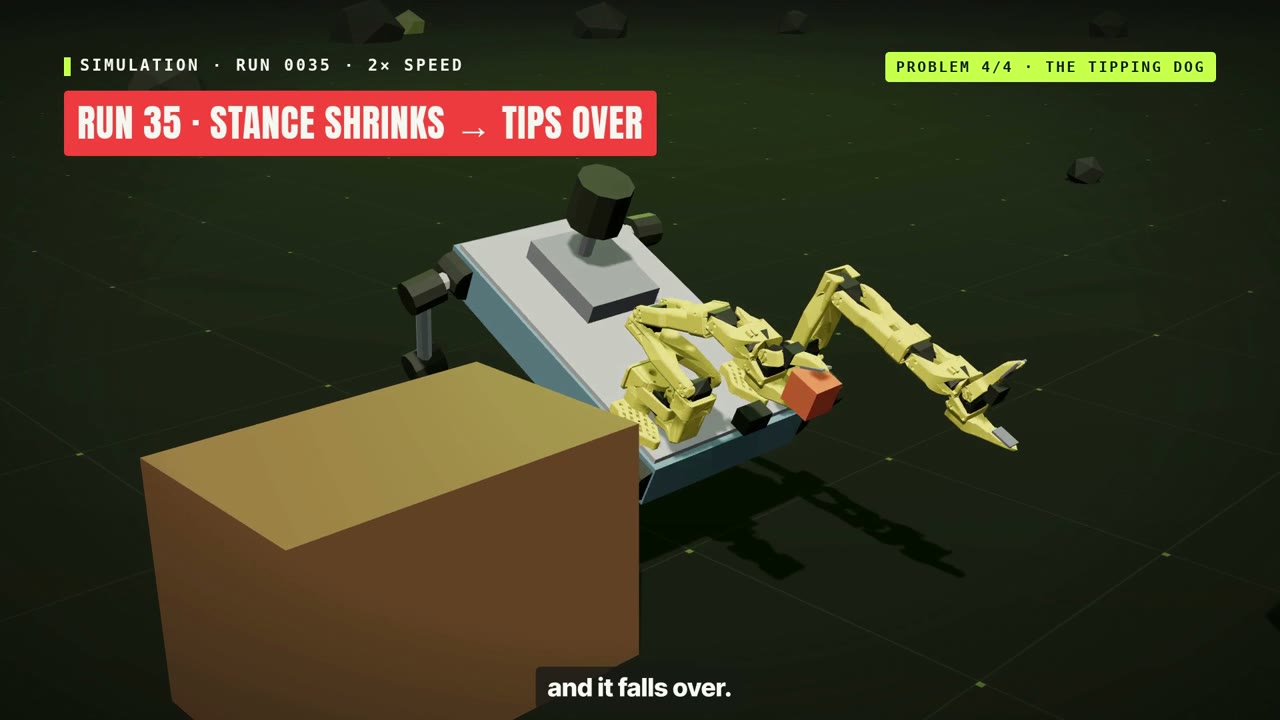
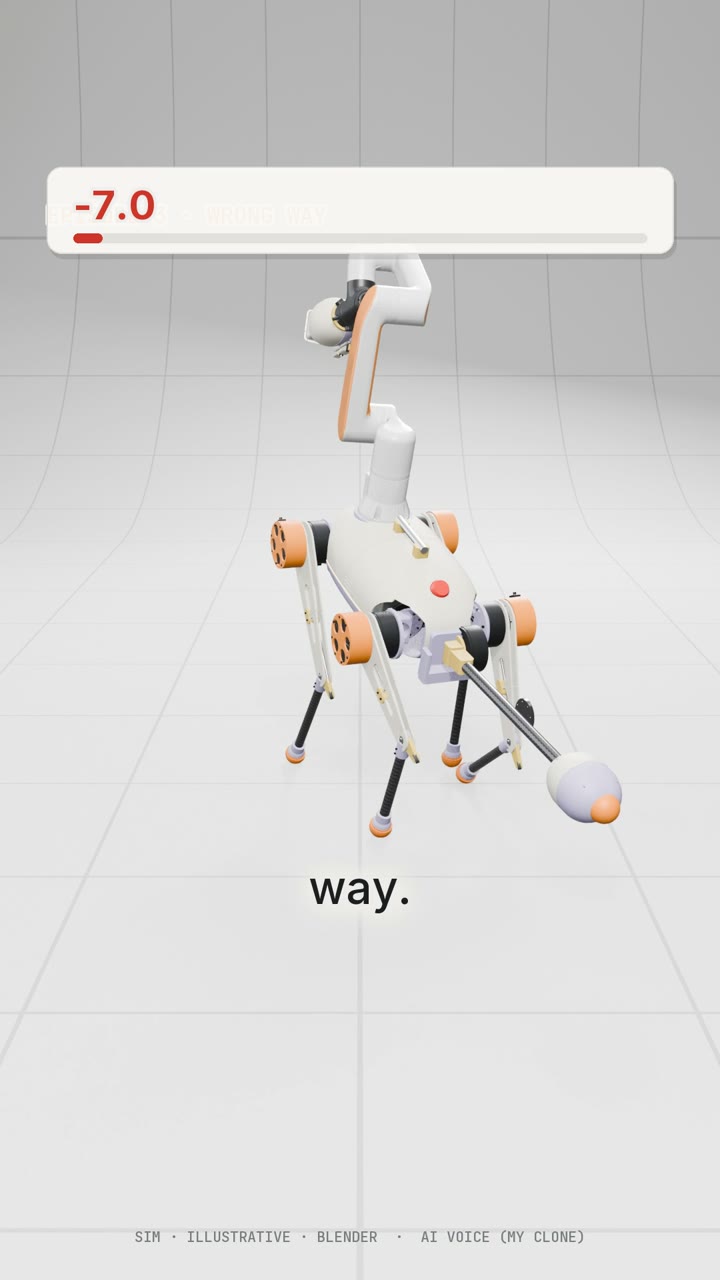
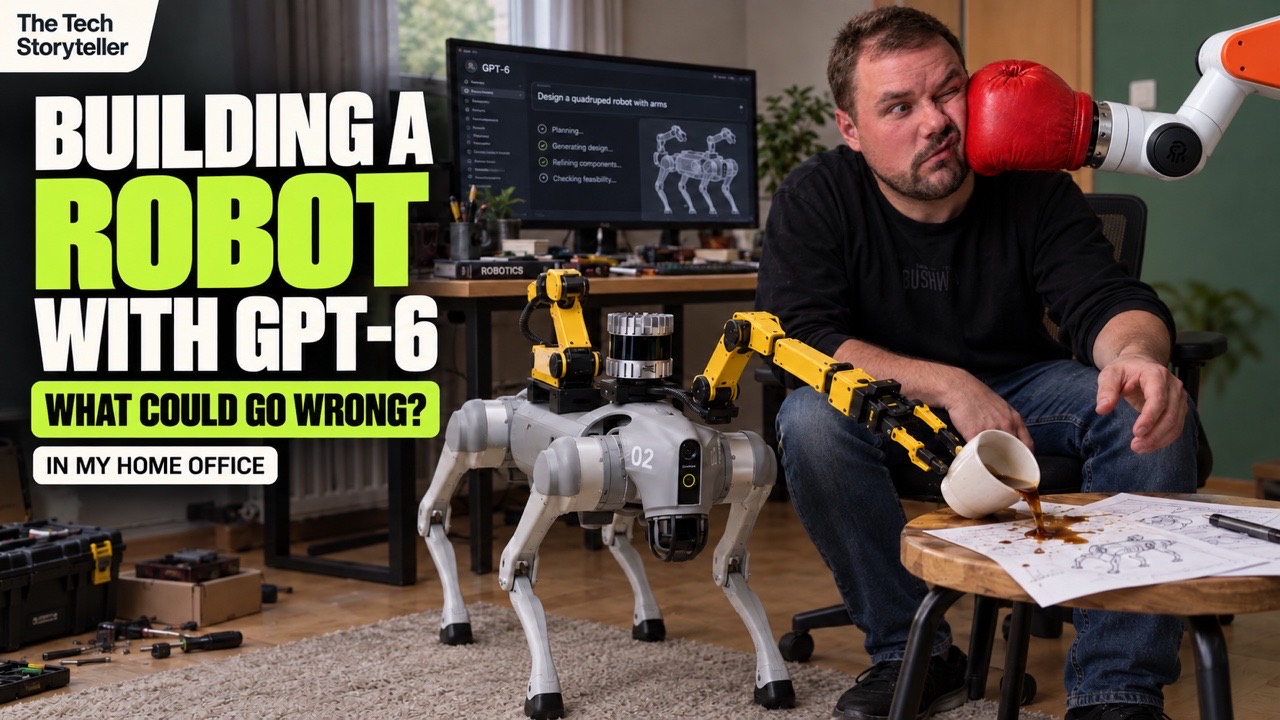
Episode 7 explored a low-cost custom quadruped carrying two SO-101 arms. This was not a Unitree robot. It established a problem that returned in the office: moving an arm changes how the whole body must support itself.
Across 38 recorded simulations, 18 were marked OK, 19 failed and one aborted. Slipping blocks, vision, connection loss and tipping shaped the iterations. A 1.35 mm placement error belonged to one selected simulated run, not the whole set. GPT-6 helped write code; a deterministic controller executed the demonstrated motion.
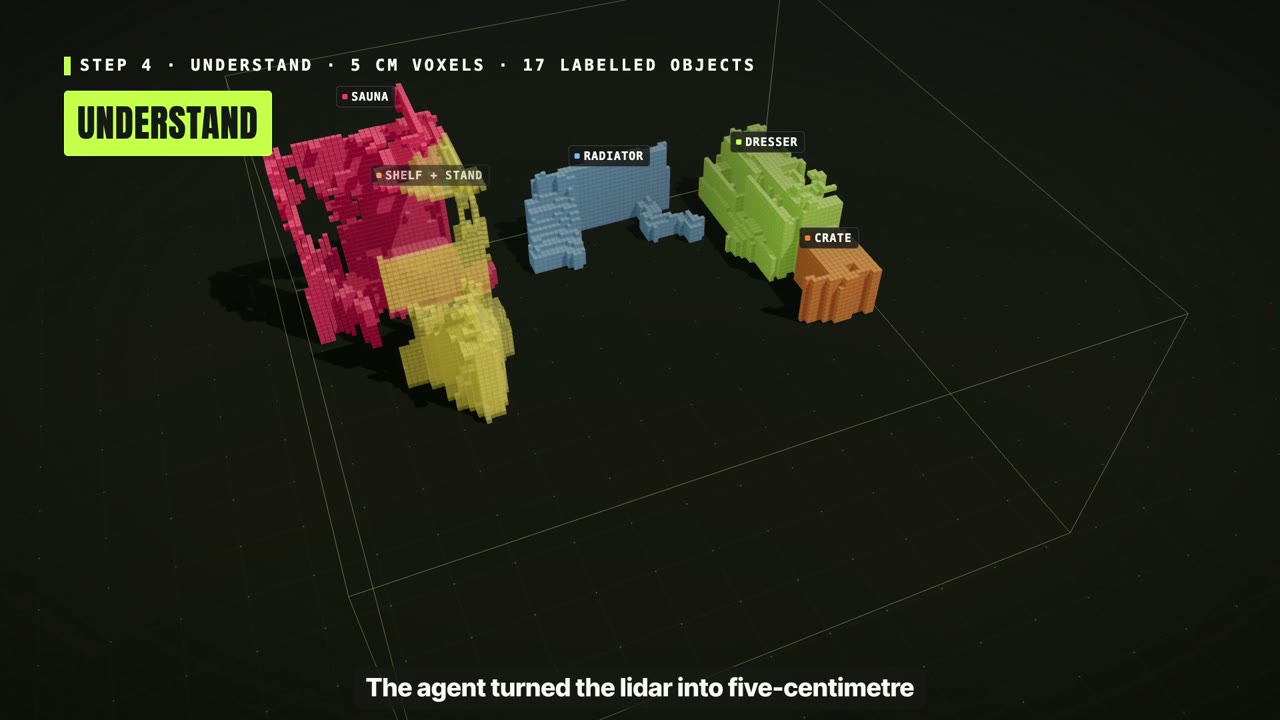
In Episode 8, real Ouster geometry and phone-video appearance helped build the office twin. Colliders, labelled objects and estimated physical properties made it interactive. The room-reconstruction case study follows those layers in more detail.
The distinction mattered once the robots arrived. A surface that looks convincing is not automatically a correct place to put a foot or close a gripper. The environment adds assumptions about scale, contact and reach that a free-space animation can avoid.
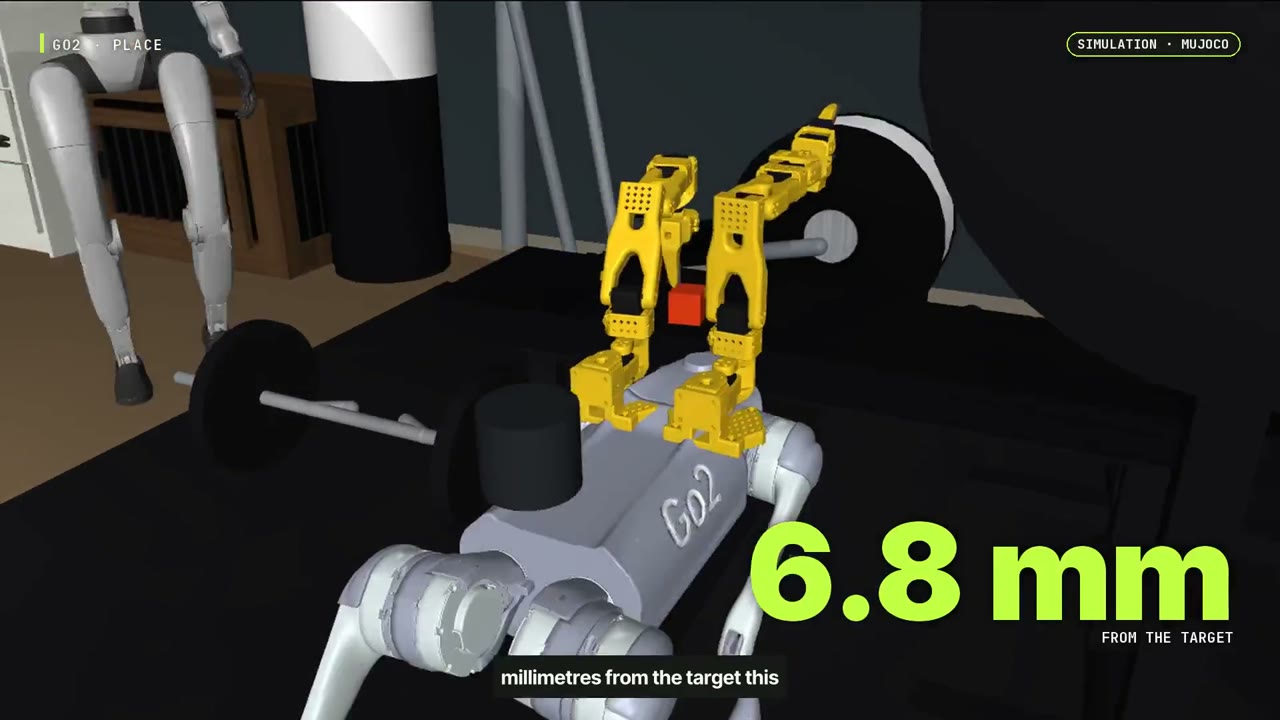
Episode 9 placed simulated Go2 and G1 robots in that room. Calibration and movement problems came before the manipulation result; scene reconstruction and lighting complicated what the robots appeared to see. The Go2 sequence included a gripper closing on air and recovery work.
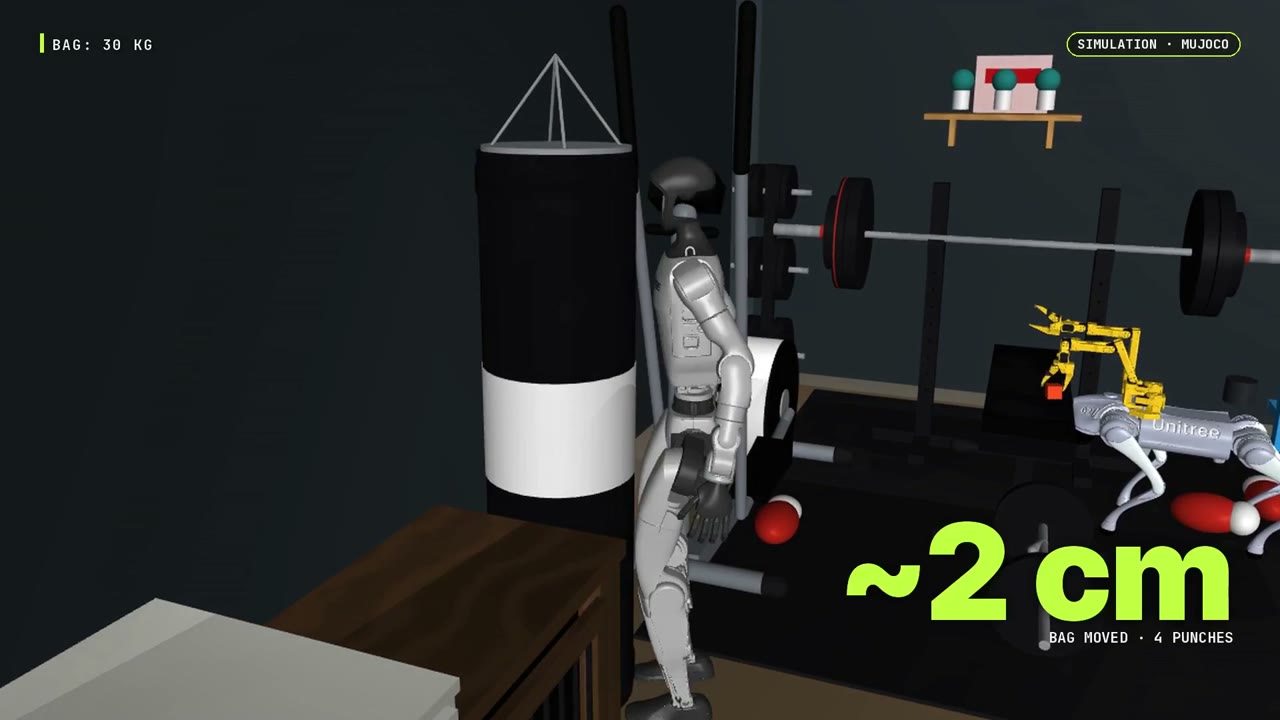
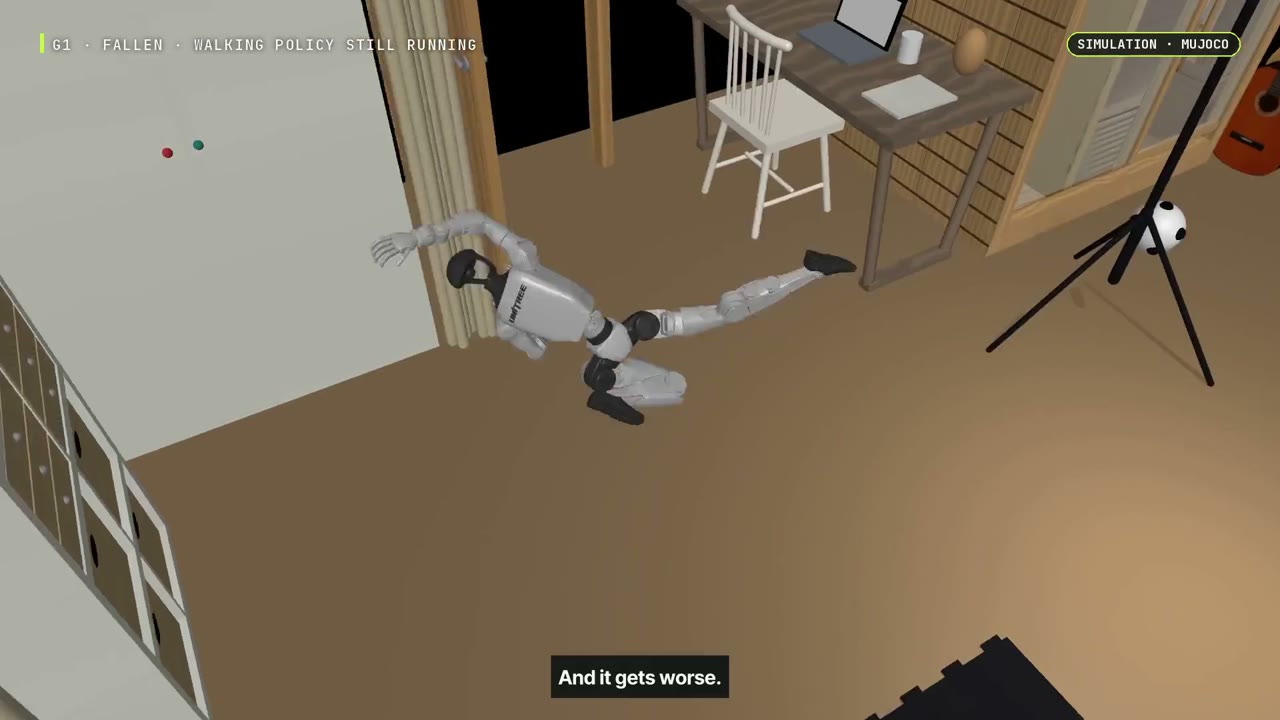
The G1 could walk, but forcing an arm overhead exposed a balance failure. Successful locomotion did not settle what would happen when the upper body moved differently. That made an ordinary wave a useful engineering test of a much larger assumption.
The corrected published edit includes reconstructed G1 fall and fallen-robot-drag sequences using an open velocity policy and model. These are not recovered recordings of the original run. Robot-to-robot collisions were disabled, and selected placement errors do not establish grasp repeatability. All robot-side evidence here remains simulated.
The later Heron design experiments and 9:16 films revisit the same tension from the design side. Replacing separate small arms with an ECO65 neck and a tactile beak changes reach, mass and the support problem together. A friendlier silhouette does not remove those loads.
Heron’s walking and falling scenes are scripted illustrations; its contact grasps are simulated. The reinforcement-learning film explains a proposed learning workflow, not a trained policy for the current robot. This is a separate concept, not evidence of a Unitree integration or physical walking result.
The useful thread is support under changing tasks: where the feet are, what the arm does, how contacts behave and what the controller assumes. A convincing walk, one accurate placement and a recovered grasp are separate observations. The next tests need repeated trials and physical contact validation.
 Watch episode 07 ↗
Earlier experiment · custom quadruped simulation
Read the episode field note →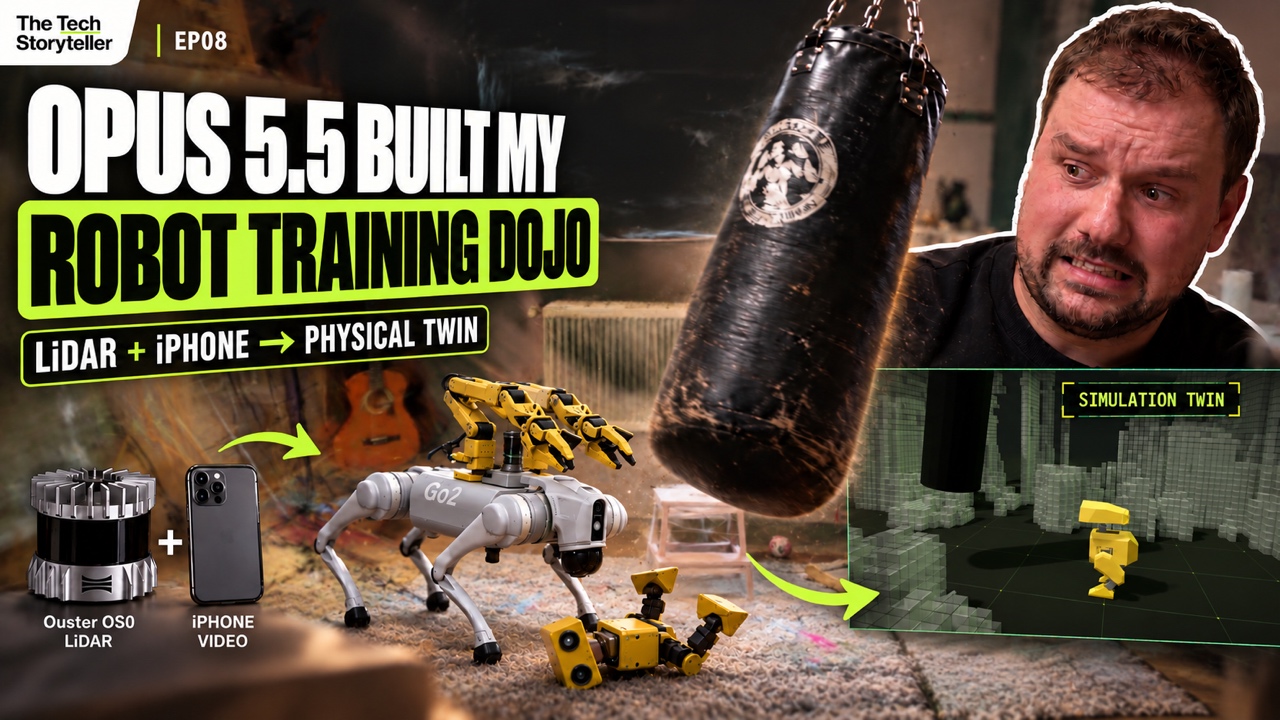 Watch episode 08 ↗
No trained autonomous real robot; masses estimated.
Read the episode field note →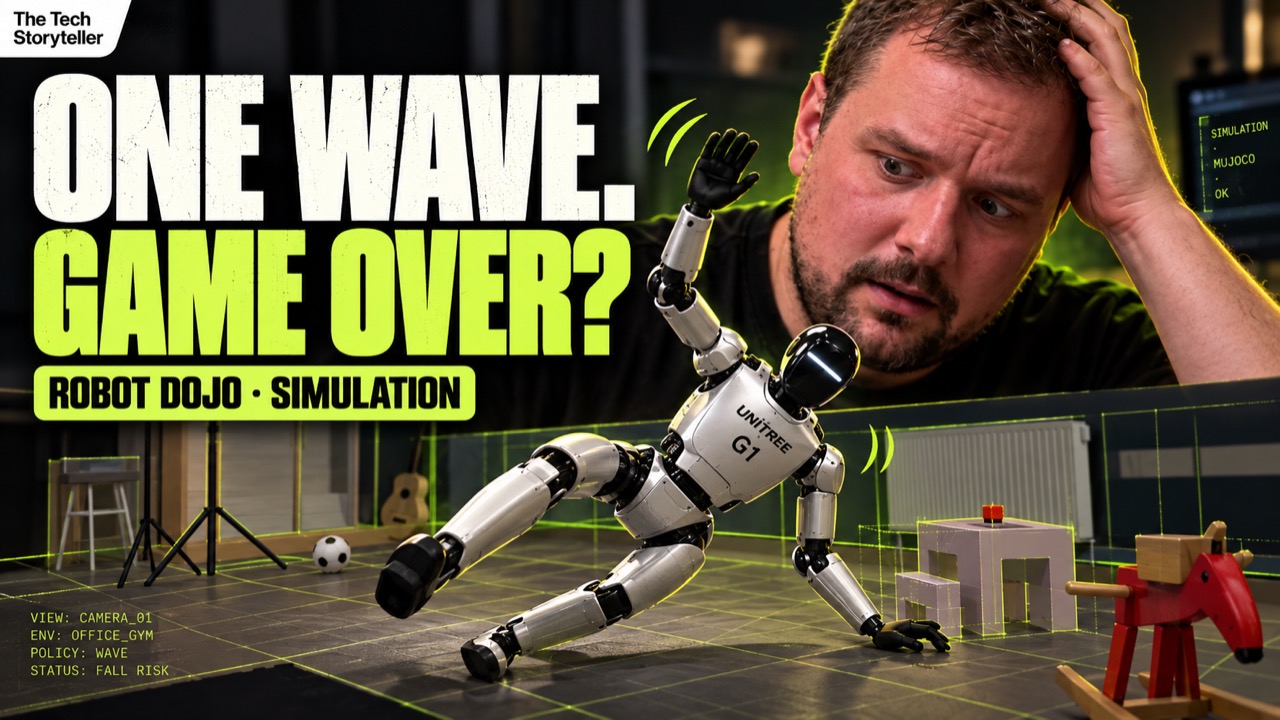 Watch episode 09 ↗
All robot-side evidence simulated; grasp repeatability unresolved.
Read the episode field note →HOW THIS COULD WORK FOR YOUR TEAM
For robot providers and simulation tools, the format creates application stories, explanatory graphics and bounded technical demonstrations. Physical hardware testing would be a separately scoped project.
Explore the offer→Pricing on request
LET’S BUILD A USEFUL STORY
Bring a product, a workflow or an engineering question. We agree the experiment, deliverables, publication and usage before the work starts.
Discuss a collaboration↗Pricing on request · lukas@alphavant.com