
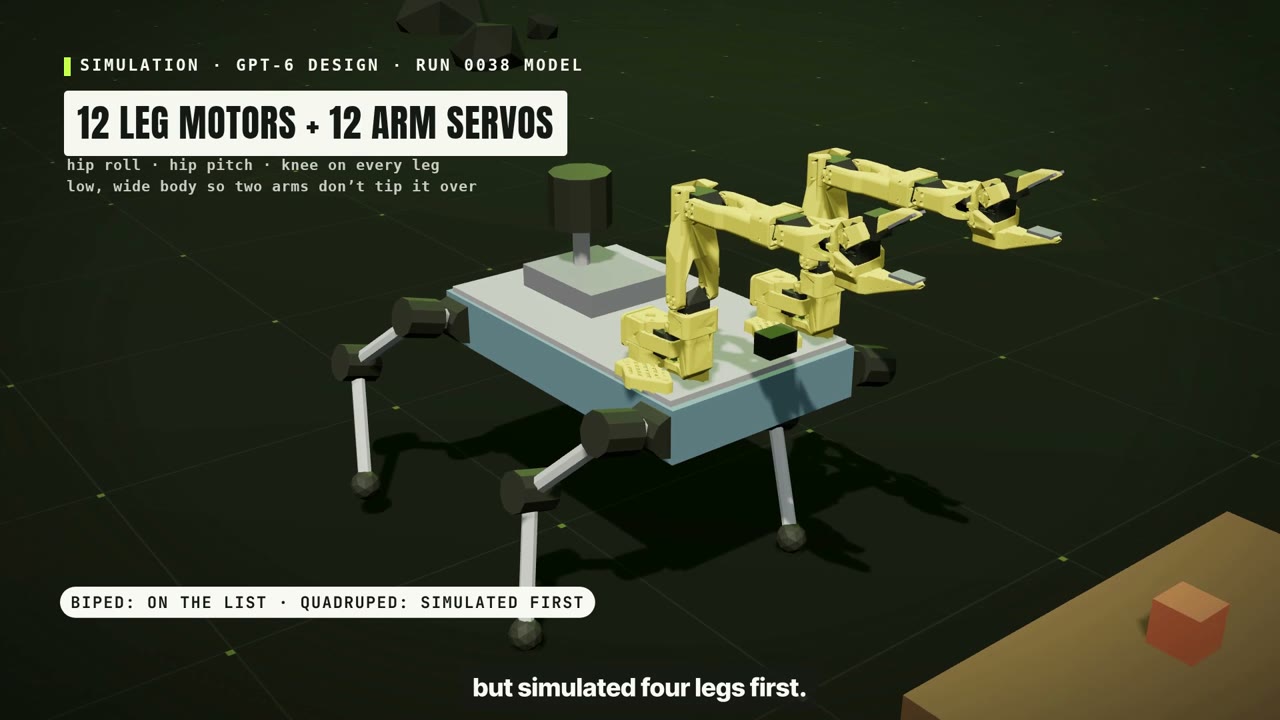
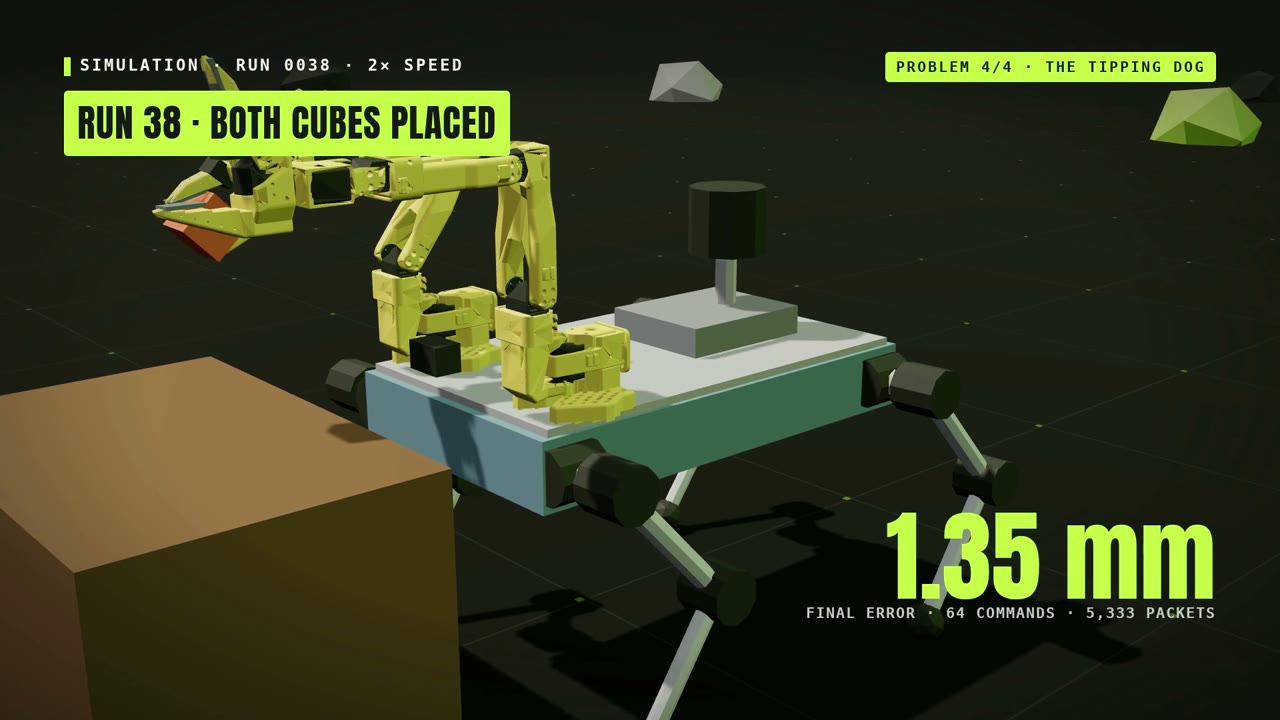
GPT-6 co-engineers a low-cost quadruped carrying two SO-101 arms. Across 38 recorded simulation runs, 19 fail; slipping blocks, vision, connection loss and tipping shape the design. A deterministic controller executes the demonstrated run.
While working on the larger experiment, I tried building a robot dog with GPT-6. The interesting part quickly became the gap between a recognisable robot shape and movement that could support itself.
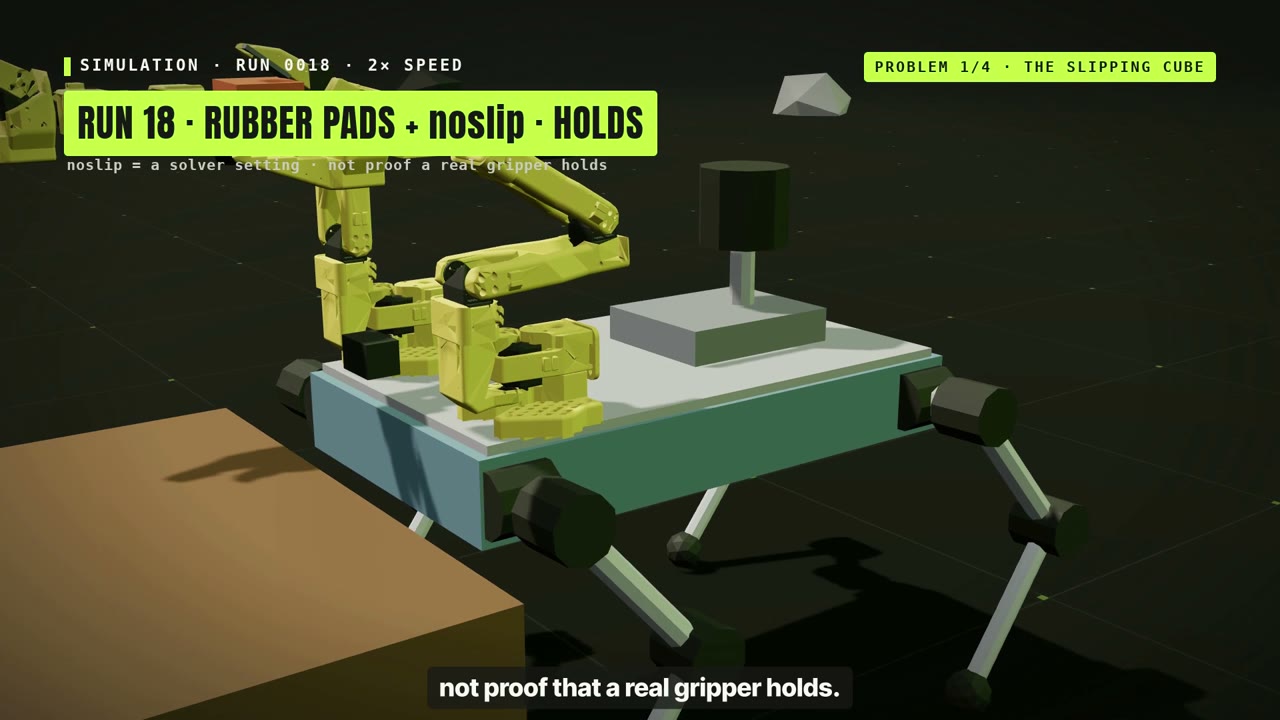
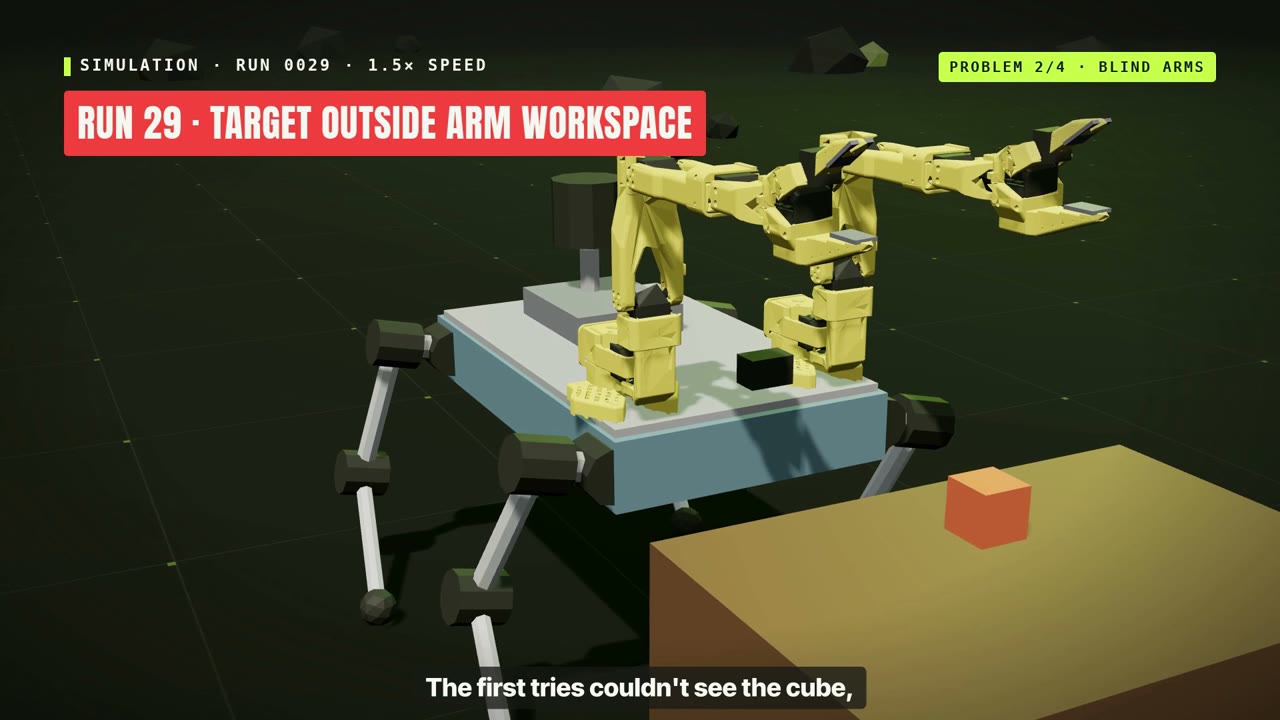
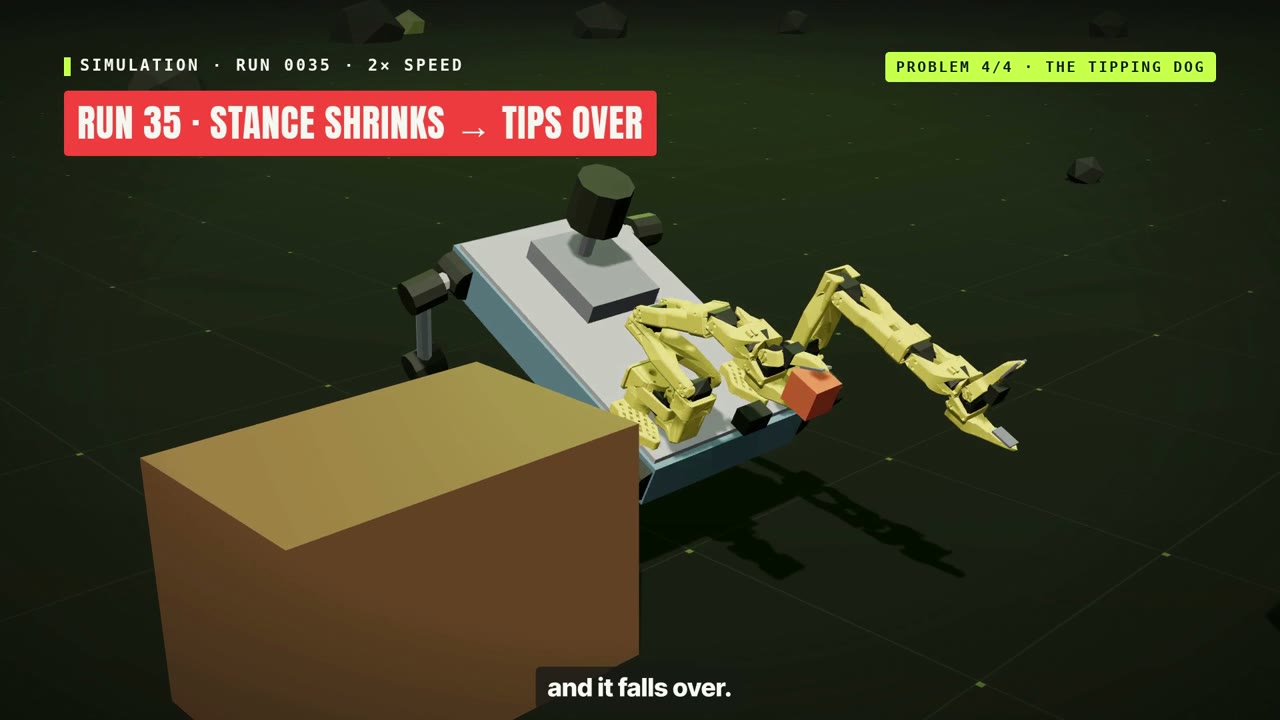
Tipping, support lines and controller iterations gave the simulation a useful role. Each fall made an assumption visible: where the mass sat, where the feet supported it, and what the controller was actually asking the joints to do.
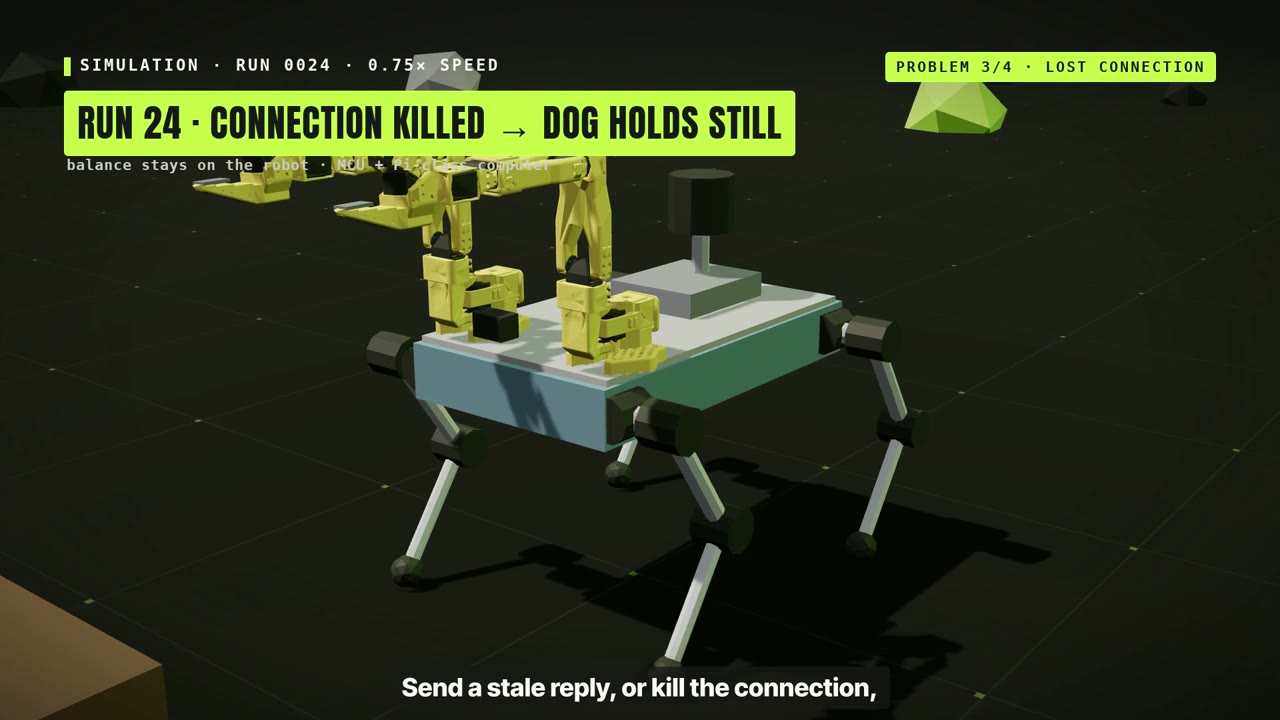
The footage is simulation. It does not show a fabricated quadruped or a proven physical walking controller. The experiment feeds into the later office-dojo and Heron work, where appearance, articulation and successful locomotion still have to be evaluated separately.
Read the detailed engineering field note →
Scope of this episode: Simulation only; GPT-6 writes code, deterministic control drives.
Based on the published episode and its production record. YouTube publication verified 22 October 2026. Stills are extracted from the released episode. Captions distinguish recorded evidence, reconstruction, simulation and illustrative material.