
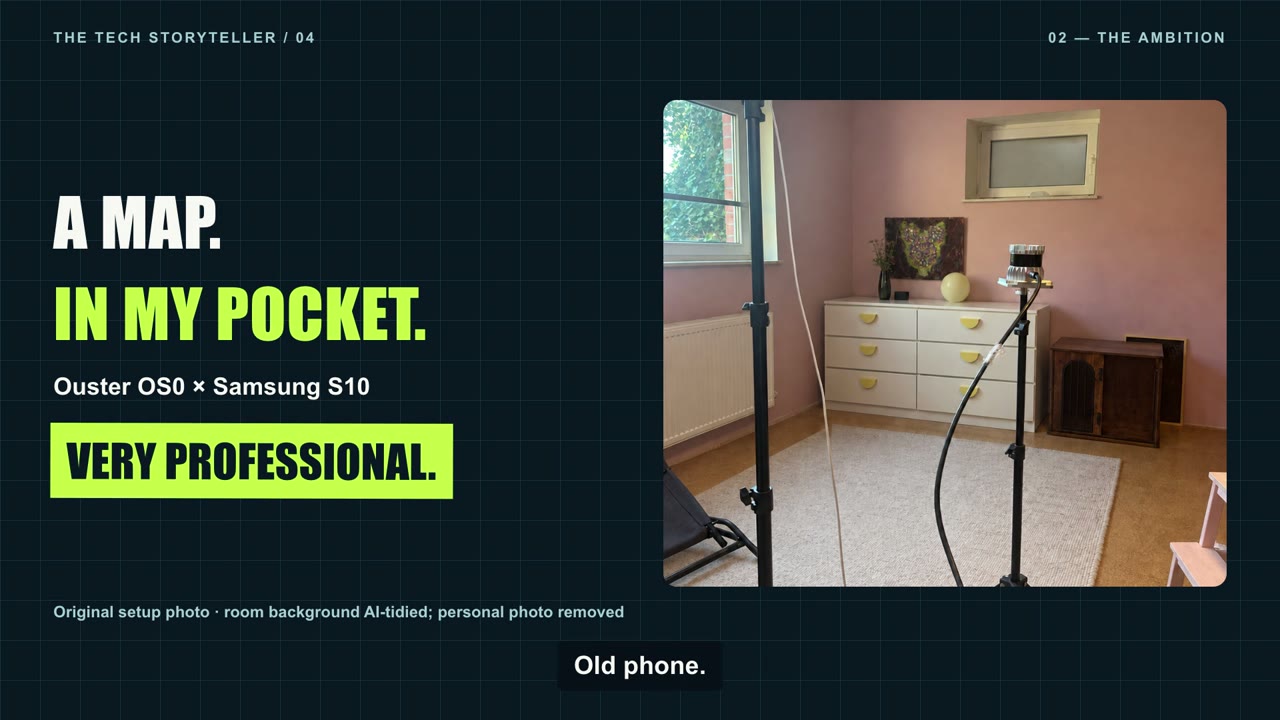
Live Ouster data reaches an old Samsung S10 through a Mac bridge. Pose jumps, IMU compatibility and a disappearing Ethernet adapter expose the gap between displaying scans and reliable mapping; phone localization is still future work.
The working route was Ouster to Mac to Samsung S10. The Mac received and processed the scans; the old phone displayed them. That was a useful result, and it also made the next gap obvious.
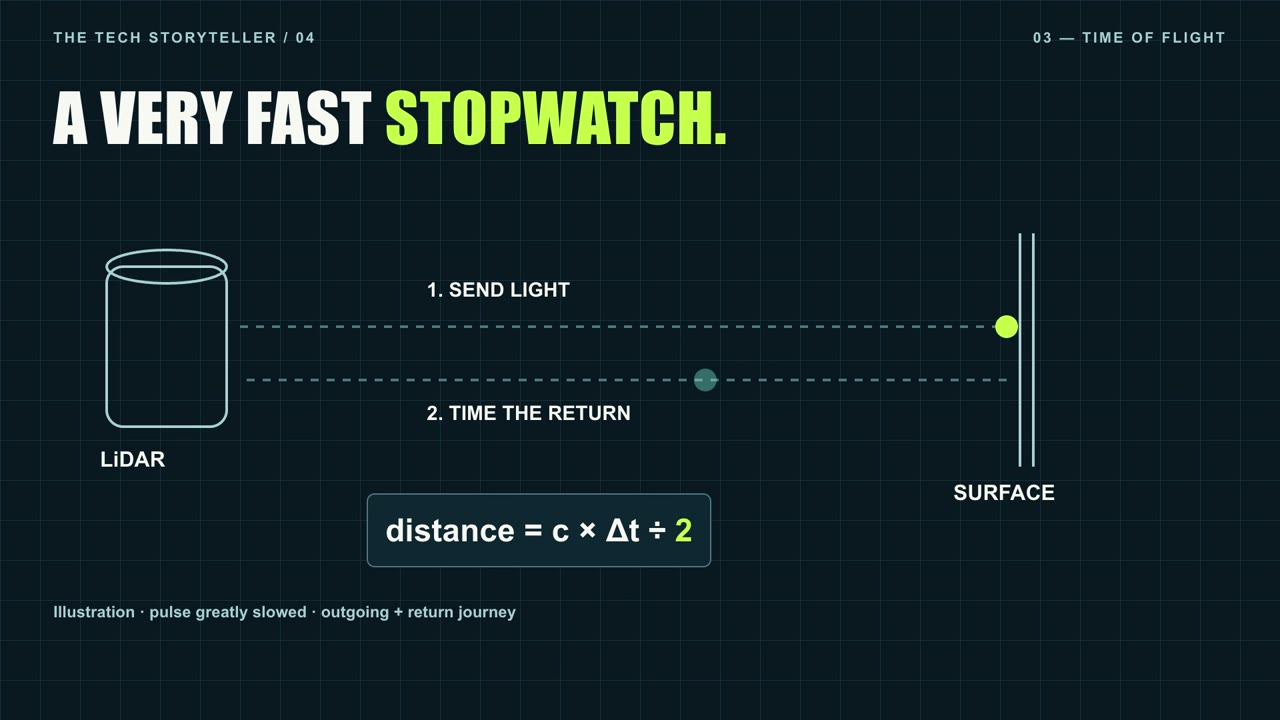
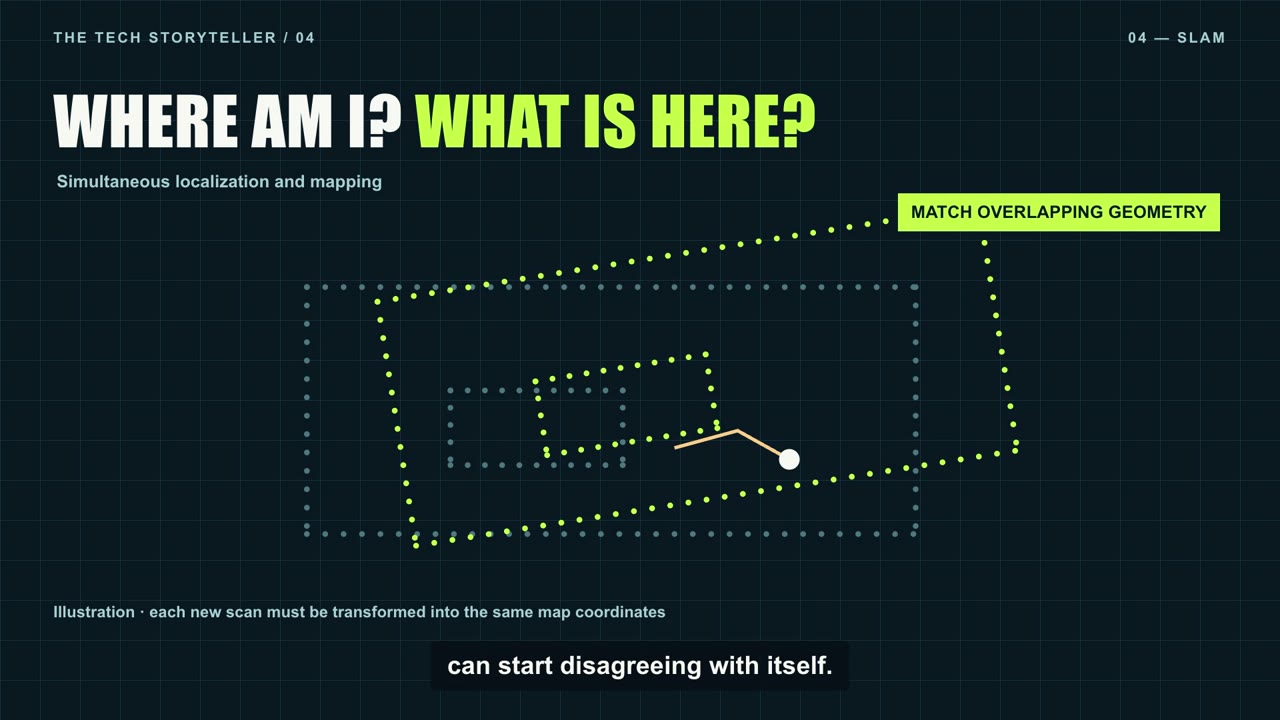
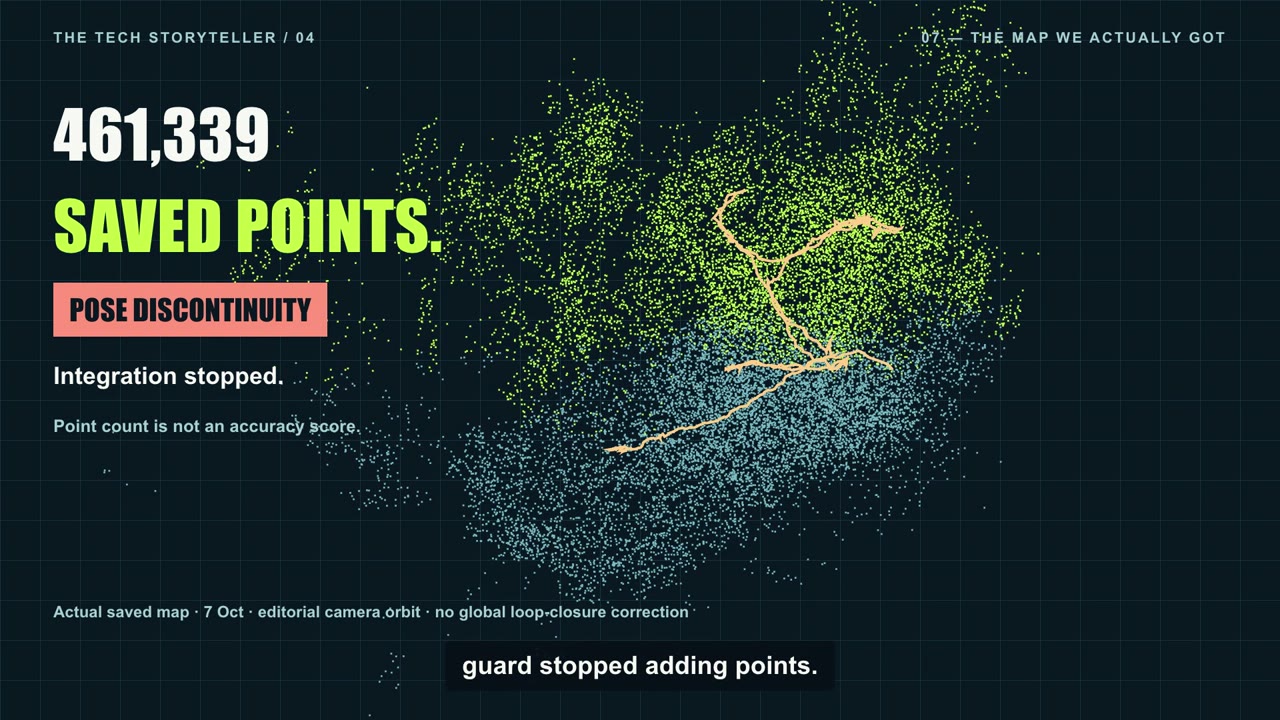
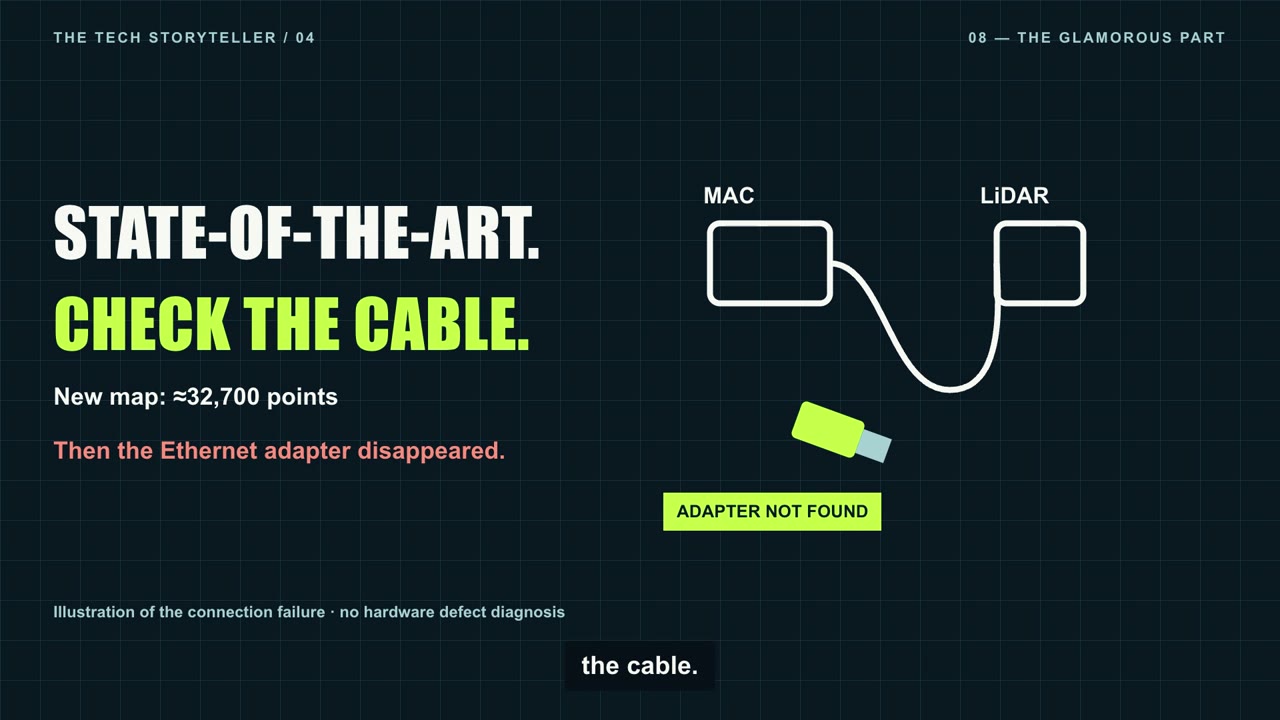
The saved map exposed pose jumps. An IMU compatibility catch complicated the mapping pipeline. Then an Ethernet adapter disappeared from the Mac, reminding me that the transport layer could derail the experiment before the geometry had a chance.
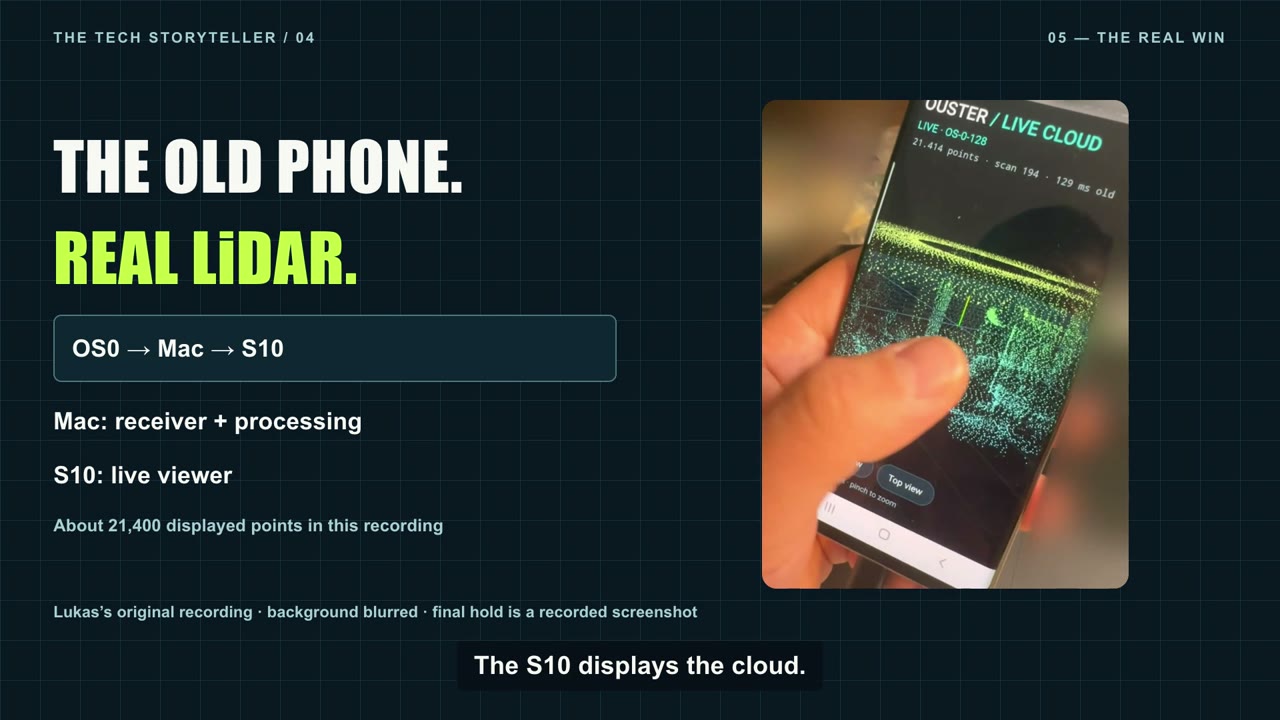
The phone was not localising itself against the Ouster map. That remained a proposed next step. Showing real scans on a handheld screen and knowing where that screen is inside the scene are separate capabilities, and the episode keeps that boundary visible.
Read the detailed engineering field note →
Scope of this episode: Phone is a viewer; localization against map not implemented.
Based on the published episode and its production record. YouTube publication verified 22 October 2026. Stills are extracted from the released episode. Captions distinguish recorded evidence, reconstruction, simulation and illustrative material.